News is relentless, repetitive, and shaped by what spreads fastest rather than what matters most. Traditional media continues to contract, yet its reach has expanded across digital, social, and AI-driven platforms. The bidding battle between Netflix and Paramount for Warner Bros. Discovery is a clear example, quickly escalating from industry news to global headlines across every channel at once. Attention is scattered, timelines are compressed, and AI accelerates everything.
These issues are food for thought for a public relations strategy, but first, what does the playing field look like and how has it really changed?
The Rise and Fall of Traditional Media: Newsroom contraction persists. The Medill School of Journalism’s State of Local News Report tracked 136 newspaper closures in 2025, up from 130 the year prior. The U.S. has lost nearly 3,500 newspapers and more than 270,000 newspaper jobs over the past two decades. Fewer than 6,000 newspapers remain, and most are weeklies. As print and broadcast audiences decline, competition for earned coverage, as opposed to paid ads or advertorials, intensifies while digital native outlets continue to grow.
Trust in Media vs. Alternative Sources: Trust in traditional media remains fragmented as audiences turn to alternative voices, such as influencers, independent creators, and AI tools. The Edelman Trust Barometer 2026 found that among those who trust influencers, 57% would trust or consider trusting a company they currently distrust if recommended by a financial influencer. Businesses still rank among the most trusted sources of information. This creates an opportunity for a company to be an influencer all on its own.
Digital and Social Video Lead Consumption: 86% of U.S. adults at least sometimes get news from a smartphone, computer, or tablet, including 56% who do so often, according to the Pew Research Center. Digital is now the dominant channel. About half of U.S. adults get news from social media, and video platforms continue to gain ground. 38% of U.S. adults say they regularly get news on Facebook, and 35% say the same about YouTube. Short form, mobile-first content is no longer optional. It is the default.
Social Media Power and Platform Shift: Social media remains central to communications strategy. Most companies now invest heavily, and the vast majority incorporate paid social. YouTube and Facebook remain the most widely used platforms, while TikTok, Instagram, WhatsApp, and Reddit continue to grow. These platforms are key gateways for news discovery, especially among younger audiences under 30.
Fragmentation, Influencers, and AI Disruption: The media ecosystem is more fragmented than ever, with audiences spread across news sites, social platforms, podcasts, and AI-driven discovery tools. Fortune Magazine’s Nick Lichtenberg produced more stories in six months (over 600) than any of his colleagues delivered in a year, thanks to AI. Muck Rack’s State of Journalism 2026 shows 82% of journalists now use at least one AI tool, up from 77% last year. ChatGPT is used by 47% of journalists, Google Gemini rose from 13% to 22%, and Claude doubled from 6% to 12%. At the same time, 26% cite unchecked AI as a top concern, up from 18%. AI has reshaped how news is discovered, summarized, and distributed. This adds both opportunity and complexity.
The New Reality: Multi-Channel by Default: There is no longer a single primary news source. Audiences split across news organizations at 36%, search engines at 28%, and social media at 19% as their first stop for breaking news. Visibility now depends on showing up across channels at the same time.
Breaking through today takes persistence, not one outreach. It requires disciplined follow up with media, rapid response to the news cycle, and a coordinated presence across earned, owned, and social channels. Visibility now belongs to organizations that move early and stay in front of the conversation.
IN THE NEWS
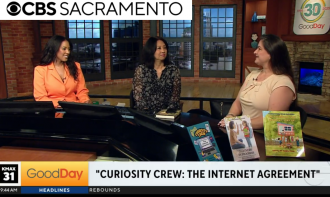
California Virtual Academies (CAVA) Teacher Featured on CBS Sacramento
CBS Sacramento featured a CAVA teacher, who shared insight on how families can help students build safe and responsible habits with technology. The segment focused on clear expectations, parent and student communication, and how early awareness supports stronger decision-making online. Watch the segment here.
ADVFN’s The Watchlist interviews Nuvve CEO
Nuvve CEO Gregory Poilasne was featured on ADVFN’s The Watchlist. He spoke about Nuvve’s expansion through a series of battery storage projects across Europe while advancing flexible energy solutions in Japan. Click here to watch the full interview.
ICYMI: Talk PR with Maria Contreras-Sweet
The latest episode of Talk PR featured Maria Contreras-Sweet, former Administrator of the U.S. Small Business Administration and Board Chair of the Los Angeles World Affairs Council. She shared her perspective on the small business landscape, reflected on her leadership experience, and highlighted California’s position as the world’s fourth-largest economy. Tune in here.